Search

Installing Window Air Conditioners

Wednesday, October 28, 2009 0 comments

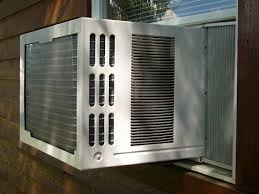
For those who are going to attempt to install their own air conditioner, it is important to make sure that you are thinking a few things through before you jump right in. You want to learn from my lesson and never try to do this alone, even if the AC seems light enough.

This is because lifting the window, getting the air conditioner in, and angling it the right way while closing the window can be a little more difficult than meets the eye. This is not to say that you are unable to do it on your own, but it would just be easier if you had someone there with you, especially if an accident happens.

When you are installing an air conditioner, you want to make sure that it remains leaning back a little once you close the window on it. This is to ensure that the water will drain out of the back of the air conditioner instead of sitting in it and then overflowing into your house and behind your walls. With this said, it is vital to make sure that you are double checking where the drain hole is and whether or not it is plugged before you go trying to get the machine in place. I found it to be much easier this way.

Once you have the AC unit in place, pull out a level and check to make sure that it is leaning back some. It does not have to be a major slope but just enough so that the water would naturally roll to the back of the air conditioner. Once you have done all of this, you are ready to turn on and enjoy your new "best friend".

Mold Coming From Air Conditioner

0 comments

The primary byproduct of air conditioning is moisture. Both central air and portable units are susceptible to attracting mold spores because they provide oxygen rich and moist environments that molds thrive in. Molds are a type of fungi that produce microscopic cells called spores that are easily spread through the air, especially with the help of an air conditioner.

Air conditioners can become breeding grounds for mold when dust gets deposited on the cooling fins and becomes damp as the air conditioner condenses water out of the air. This damp dust provides the setting for mold growth. An air conditioning system that is properly designed, installed and maintained shouldn't cause mold growth. However, systems that are improperly designed or oversize may cool the air, but not remove enough moisture. Mold growth can also appear in air conditioning systems have been improperly installed, are in need of maintenance or that have water drainage problems.

Unchecked mold growth can lead to health problems. Touching mold or inhaling mold spores can trigger allergic reactions or asthma attacks in sensitive individuals. In addition to respiratory problems and fungal infections, mold exposure can also irritate the eyes, lungs, nose, skin and throat. Those at greatest risk of adverse health effects from mold exposure are individuals with respiratory conditions, allergies, infants, small children, the elderly, pregnant women and people with weakened immune systems.

Ways To Prevent Mold Growth In Air Conditioners Include:

• Make sure the condensation pan is not overflowing, causing water to collect on the floor. Make sure the drainage line is clear and unblocked.
• Regularly clean air conditioning filters and allow them to dry thoroughly before reinstallation.
• Have semi-annual maintenance checks on your HVAC system and duct work conducted by professionals.
• Install an ultraviolet (UV) light in a duct near the condensation pan.

Moisture control is the key element to keeping an air conditioning system free of mold. Any signs of water damage around the air conditioning system need to be addressed within 24-48 to prevent mold growth. Visible moisture around the base on an air handler is often evidence that the condensation hose or drain pipe is blocked and should be flushed immediately.

If you discover mold on hard surfaces, wash it thoroughly with detergent, bleach and water and dry the area completely. Remember, there is no foolproof way to eliminate indoor mold growth; the best defense is to control moisture to inhibit a mold-friendly environment.

Cleaning the Condenser Coil

0 comments

Air Conditioning works by exchanging heat from inside a building to the outside air. To do this some very basic refrigeration principles need to take place. One of the most critical pieces that make this happen is the condenser coil. This is usually the aluminum coil the surrounds the air conditioning compressor.

What happens inside this outdoor unit is a very basic state change of the refrigerant inside the air conditioning unit. The refrigerant that changes from a liquid to a gas inside the indoor coil moves to the outside where the compressor compresses the gas under high pressure. When this happens the gas also becomes very hot. The hot gas then leaves the compressor to start traveling through the many feet of tubing in the condenser coil. As the gas cools it changes back to a liquid form going back indoors to start the cycle all over again.

Big problems start when the condenser coil becomes so blocked up with dirt that the hot gas in the condenser coil does not cool enough to change the hot gas back to a liquid form. If this happens the cooling process does not happen and then air conditioner runs but is not cooling. The compressor starts to get very hot and the ultimate result will be the death of a compressor. For these reasons the condenser coil must be kept clean and free of debris at all times when the air conditioner is running. Cleaning the coil is a fairly simple process, Here are a few guidelines to follow when doing this.

To clean the coil a few simple tools are needed. A garden hose with a nozzle, wrenches to remove the condenser fan, a garden sprayer for applying the cleaning solution. The first thing is to disconnect the power to the outdoor unit. There should be a disconnect switch of some type near the condenser. Then remove the fan from the condenser unit. Usually this will be the top of the unit. The fan can usually be laid aside carefully without disconnecting the wires to the motor. Carefully wet down the coil with the garden hose. If you have very high pressure water where you live be careful that the water pressure does not bend over the fins on the coil. These are very thin and fragile. If they get bent over the air will not be able to freely flow through them. Using the cleaning solution from the garden sprayer, coat he inside and the outside of the coil. Let the solution work on the dirt build up before washing it off. If you use a foaming type coil cleaner then let the foam cook the dirt out of the coil. Then use the garden hose to wash the dirt out of the coil. I often work from the inside spraying out through the coil. This is the reverse of the usual air flow and it washes the dirt out easier. Rinse the coil with water till it is clean with no more dirt or cleaner coming out. Replace the fan and start the unit back up.

The cleaning solution for the condenser coil can be any good household cleaner. Many automotive type radiator cleaners will work well. For very dirty condensers it would be good to buy a foaming coil cleaner made specifically for cleaning condenser coils. A local plumbing and heating supply house should stock coil cleaning solutions. Most of these solutions are very strong chemicals. Be sure to wear gloves and eye protection when working with them.

By keeping your air conditioning condenser coil clean, you will help to have your air conditioner running at the best efficiency possible. A clean condenser coil is one of the easiest ways to save electric while running your central air conditioning system. A clean coil will allow your compressor to run cooler and help it to last longer. Your condenser coil should be thoroughly cleaned at least once a year. If in you live in very dirty areas like along a dirt road you may need to clean the condenser coil more often. Also do not do things that would clog up the coil. Blowing grass clippings into the condenser coil is one common thing that happens. Keep shrubbery from growing into and around the condenser coil. This stops the air flow to the coil. Large flowers planted too close to the coil can do the same thing.

As you can see there are many things that can cause your air conditioner to work harder and cost you more money. By taking a the time to look over things and give it a cleaning you can save a lot of money.

Portable Air Conditioner Shopping

0 comments
First of all the question you need to ask yourself is, do I need a portable air conditioner? The answer to which only you will be able to provide and it will vary on certain criteria such as is this going to be a commercial purchase? Do you live in a all year round warm weather climate etc? Thinking about your situation logically should dictate whether you require a portable air conditioner.

As to saving money there are various ways that you can do this and we will be looking at each way in further detail:-

Choosing the right brand for you

There are some big brands within the market, and like within any market you will pay for this brand recognition. For example, you will pay more for a BMW then you will for a Ford. However unlike cars, portable air conditioners are not overly complex pieces of machinery. Standard units should come with comprehensive warranties and as long as a unit has a good warranty, then in general it should be a safe buy. So the lesson is do not be discouraged by a lesser know brand which is 30% cheaper.

Choosing the right model to fit you

Portable air conditioners can range in technical specification and the specification can range from a highly efficient unit enabling a very cool atmosphere using very minimal energy in an ultra sleek design to a larger more clunky type unit which uses more energy however is considerably cheaper then the first model. Obviously the model you choose needs to reflect your circumstances, if you are only intending to use the unit once every night for 30 minutes in your upstairs bedroom before you go to bed because the ventilation in your room is poor, then I doubt you will need a top of the range deluxe model. Be wise.

Do not be dazzled with any sales pitch

This point is actually very important. Believe it or not when you are looking to purchase a portable air conditioner the difference between the most expensive and most cheap units may be insignificant for you. Do your research and make sure you are getting a good deal.

Do not pay unnecessary fees

The most important point by far. When we mention unnecessary fees, we refer to an overly expensive priced unit. Have you ever noticed that if you go to a store which is known for being of 'high quality' you may see a item which is priced a lot more expensive then the same item at a store lesser known for its quality? You are basically paying for the privilege of buying at that store.

When you buy at a big chain, especially one that has local stores, you are paying for their heating costs, their employment costs, their building costs, their maintenance costs, their large director salaries and more all in the cost of the portable air conditioner you are looking to buy.

If you look to buy from a merchant who keeps their associated costs low by minimising employment and building costs etc etc, then this results in overall a lower priced unit for you. However the trick is to still buy from a provider who will honour returns for whatever reasons and is very reputable.
US residents should click here to purchase a portable air conditioner from a trusted source at the cheapest price on the net.

More Efficient Air Conditioning for Cars

0 comments
In order to squeeze more mileage out of a gallon of gas, researchers at the National Renewable Energy Laboratory in Golden, Colo., are working to improve the efficiency of a critical but often overlooked piece of automotive equipment: the air conditioner.

According to N.R.E.L.’s findings, seven billion gallons of gasoline – a volume representing nearly six percent of total fuel consumption in the United States – are used annually to run the air conditioners of passenger vehicles. Beyond fuel use, the Environmental Protection Agency reports that refrigerant leaks from auto air conditioning units add an additional 50 million metric tons of carbon emissions to the atmosphere each year.

The overall goal, said N.R.E.L.’s senior engineer and project head, John Rugh, is to improve the efficiency of conventional car air conditioners by 33 percent.

While the approach is piecemeal, Mr. Rugh sees his work as critical to the larger effort to increase the fuel efficiency of American-built cars. New fuel efficiency standards, announced last month by President Obama, call for American auto manufacturers to achieve an average fuel efficiency of 35.5 miles a gallon.

The plan, which will cover cars built between 2012 and 2016, is projected to save 1.8 billion barrels of oil and reduce greenhouse emissions by 900 million metric tons, according to White House estimates.


E.P.A. credits for greenhouse gas reductions will also “encourage more efficient air conditioning systems,” said Mr. Rugh. “There is increasing attention on our work because of that.”

N.R.E.L. is testing will test an alternative air conditioning system that uses thermoelectrics, a kind of semiconductor that produces a hot and cold side when an electrical current is passed through it.

Small thermoelectric modules placed throughout the car, said Mr. Rugh, could potentially replace augment the power-robbing pumps and condensers of conventional air conditioners. It would also eliminate the potential for refrigerant leaks, he said.

One drawback to the use of thermoelectrics, however, is the scarcity of the material – bismuth telluride – that is used to manufacture the modules.

Beyond the wholesale re-engineering of air conditioning systems, the N.R.E.L. team is looking at simpler ways to reduce air-conditioning use. By installing solar-reflective glass and paint, for example, the N.R.E.L. team reportedly reduced interior air temperatures in a passenger car by 34 percent and seat temperatures 35 percent.

The research team, part of N.R.E.L.’s “Vehicle Ancillary Load Reduction” group, will work later this summer with the Ford Motor Company, which, in December, was awarded $4.2 million by Energy Department to improve conventional air conditioning efficiency and develop a thermoelectric air conditioning system.

Speaking of Having No Air Conditioner...

0 comments
This bit of commentary was motivated by my eating of really spicy food in the middle of this very warm day in the hottest room in the house, all of which adds up to a bit of light perspiration even when one is sitting still. And then I realized that the spicy food and the perspiration actually ended up cooling me off, and I began to think of other cultures who live in hot climates, and how they live (and often eat spicy foods), and why we all sweat, and why we didn't used to work in mid-day, and all sorts of things, including how our western "advances" just might not be...

Until modern times, people in very hot climates around the world lived without electric air conditioning units or systems (many or most still do). For the most part, there was no choice in the matter, but our modern, particularly western, and maybe more particularly, American, way of hot weather living is now mostly geared to and centered around air conditioning.

When it's hot, we wake in air-conditioned bedrooms. Most often, when we leave the house, we step directly into an air conditioned car. When we leave the car, we walk straight into air conditioned buildings, and when we return home, we do this in reverse. And if any of the air conditioners in this routine happen to go out, we are miserable. Why? Maybe because we are battling nature, and when our tactics (in this case our A/C's) fail, we lose.

Ever notice that 75 degrees in very early spring can feel almost too warm, but when temperatures start dropping back down toward 70 degrees in the fall, we're just about chilly enough to pull out the sweaters? I read once that it takes the body two weeks to totally adjust if it goes directly from cool to hot temperatures. For those two weeks, the hot temperatures will feel hotter than they will when we finally physiologically adapt. But if we follow nature, there's a thing called spring that usually eases us into hotter temperatures, and physiological changes happen more gradually, more comfortably, and more naturally.

When we move continually from air conditioned environment to air conditioned environment, though, how is our body supposed to adapt? Is it possible that we're not allowing nature to take its course, and so we never allow our bodies to make the adjustment that would ease the effects of heat? Are we maybe more miserable than we need to be in the heat because we've tried to outsmart it? Might this be poetic justice? (I'm kidding.)

The same need to allow time for the body to adjust is true when we encounter large changes in altitude, as high altitude mountain climbers know well. To disregard nature's timetable in making physiological adjustments, in their case, would mean death. It's wise, and healthy, to work with nature.

But we were talking about heat, weren't we?

Nowadays, people don't often think about planting trees to shade a window in summer and, conversely, to allow light in the winter. Why should they? We have air conditioners! Not many people consider the things that used to be done, guided by common sense, to keep their homes from getting unbearably hot in summer (and I think "unbearably" used to mean something different than it does nowadays). Without even thinking about it, we tend to count on our air conditioners, and I think this can sometimes be to our detriment.

I'm not saying I'm 100% opposed to air conditioning. There won't be an air conditioner in my apartment when I move, but here at our house, I have a little window air conditioner that I sometimes turn on when the temperature reaches the upper 90's or when company is here. In recent years, I've tried not to use it, but most people aren't accompanied to sweating it out, and I don't intend to train them, so I turn it on for company without making a to-do about it.

It feels nice to walk into an air conditioned place straight off a hot sidewalk, and there are good-- even life-saving-- reasons for certain people to keep their air conditioners running, so I'm certainly on no crusade against them!
air conditioners set for reptilian biology

0 comments

Both my husband and I have worked for Japanese companies for quite some time and there is always a big problem because of the air conditioner settings. While the average foreign person prefers it colder than the average Japanese person, even Japanese men find the settings preferred by the office ladies to be too hot. Some of them seem to be cold-blooded creatures based on their need to remain in an environment which is 82 degrees or hotter at any given time.